How the Shop Window Became a Street-Side Display Before the Mall
Shop window history traces how storefront glass shaped street-side displays and how mall settings later changed the viewer’s route, light, and surroundings.
How did a shop window become a display for people who had not entered the store? Shop window history is not one universal timeline: building practices and storefronts differed by place. The shift is easiest to understand through the design problem itself—how to show goods through a boundary, then how that street-facing view differed from displays in later shopping malls.
Shop window history depends on place and building practice
There is no single date when shops began displaying goods behind glass. In any particular town, the form depended on what local builders could construct, what glass was available, and how a shopfront was arranged. Without a defined place and period, it is safer to describe a gradual design change than to claim one universal sequence.
Small panes set in frames could provide a view, but their divisions interrupted it. Openings, shutters, and doors offered other ways to show or protect merchandise. A shopkeeper working with a divided window could select a few objects for the visible area; the frame itself shaped the scene.
As larger panes became feasible in some building contexts, storefronts could present a broader, less interrupted view. That did not mean every shop adopted the form at once. The useful historical distinction is between a limited opening and a more continuous glazed surface, not a claim that all streets changed together.
Glass made the street a viewing space
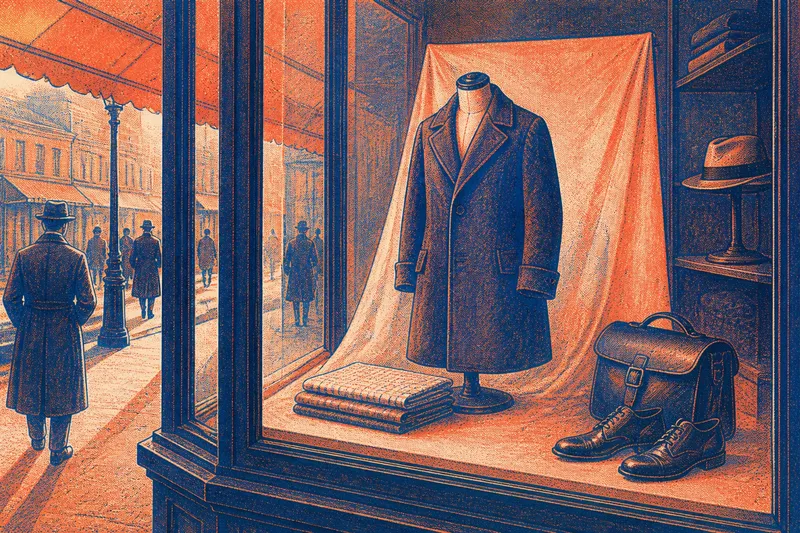
A glazed front let someone look from the pavement without first entering or asking a seller for access. It also separated the merchandise from weather and casual handling while keeping it visible. The boundary remained physical, but sight could pass through it.
Glass did not make the view perfectly clear. Reflections and glare could compete with the objects behind the pane, and the effect changed with the viewer’s position and the light. A display that looked clear from directly in front might be harder to read from an approaching angle.
Imagine a shopkeeper placing a dark coat against pale cloth near the glass and turning its collar toward the sidewalk. The concrete starting point is a coat that blends into a dim interior; the action is to change its background and orientation. The expected observable result is that a passerby can distinguish the coat’s outline more readily, though reflections may still obscure details.
Arrangement turned merchandise into a public display
A window offered limited space, so choosing what to show became part of the design. A single object could be given room to stand out, while a small group could suggest a range of related goods. Height, spacing, background, and orientation helped determine what a passerby noticed first.
The display also let people browse without the social commitment of entering and speaking with a seller. Someone could notice a shape, compare the storefront with its neighbors, and continue walking. The window made looking part of the street’s ordinary activity without determining what the viewer would do next.
For a window you are arranging now, use these checks. Each one links an observable condition to a decision:
- Check the main subject: If one item is hard to identify at a glance, move competing objects aside; otherwise, keep the arrangement and check the next condition.
- Check the background: If the item’s edge blends into what is behind it, add a contrasting backing; otherwise, leave the background in place.
- Check the viewing angle: If the identifying feature disappears from the approach direction, turn the item toward that view; otherwise, keep its orientation.
- Check reflections: If glare hides the merchandise from the pavement, adjust the placement or backdrop; otherwise, preserve the current position.
- Check the sightline: If signs or shelves block the central object, clear that path; otherwise, avoid adding more objects to the same line.
- Check whether the display still represents the shop: If an item is dusty, faded, or no longer relevant to the current offer, replace or remove it; otherwise, keep it visible.
Make one change at a time, then look again from the sidewalk. That makes it easier to tell which adjustment improved the view.
Street windows and mall displays shape different encounters
The comparison with the shopping mall is about setting, not a claim that every mall display arrived at the same historical moment. A street-facing window meets people moving along a public route, where daylight, weather, reflections, and neighboring storefronts affect the view. The passerby may approach from the side or see the display only briefly.
A mall display sits inside a managed interior route. Its surroundings are less exposed to outdoor weather, and the viewer encounters it among corridors, other shops, and interior lighting. The display still has to catch attention, but the path and visual conditions differ from those of a sidewalk.
The distinction helps explain why the early storefront mattered: it made the shop’s goods visible to people who were not yet customers, using the street itself as the viewing route. Mall displays later placed that act of looking within an interior shopping environment rather than at the edge of a public street.
Questions about shop window history and mall displays?
When did shops begin using display windows?
There was no single starting date across all places. Shops used openings and glazing as local materials and building practices allowed, so a specific timeline requires a specific town or region.
Why did larger panes matter for storefront displays?
A broader pane could reduce the divisions created by many small panes and let merchandise read as a more continuous scene. Adoption varied by building and place, so it should not be treated as a simultaneous change on every street.
How did street-facing displays differ from mall displays?
A street window addressed people moving along a public sidewalk, with outdoor light and reflections affecting what they saw. A mall display met viewers along an interior route, among the corridor and its other storefronts.
Did shop windows only serve to sell goods?
They showed and protected merchandise, but they also let people look without entering or speaking to a seller. The window made a shop’s selection visible as part of the street scene.
Read the shop window as a boundary and a view
The storefront window joined two conditions: goods stayed inside, while people outside could see at least part of the shop’s selection. The result depended on the pane, the objects, the light, and the viewer’s route—not glass alone.
For shop window history, the lasting design question is practical: what can a person see from the path they actually take? Stand where that viewer would stand, notice what the glass reflects, and adjust the display only where an object becomes difficult to recognize.